Protecting the Land
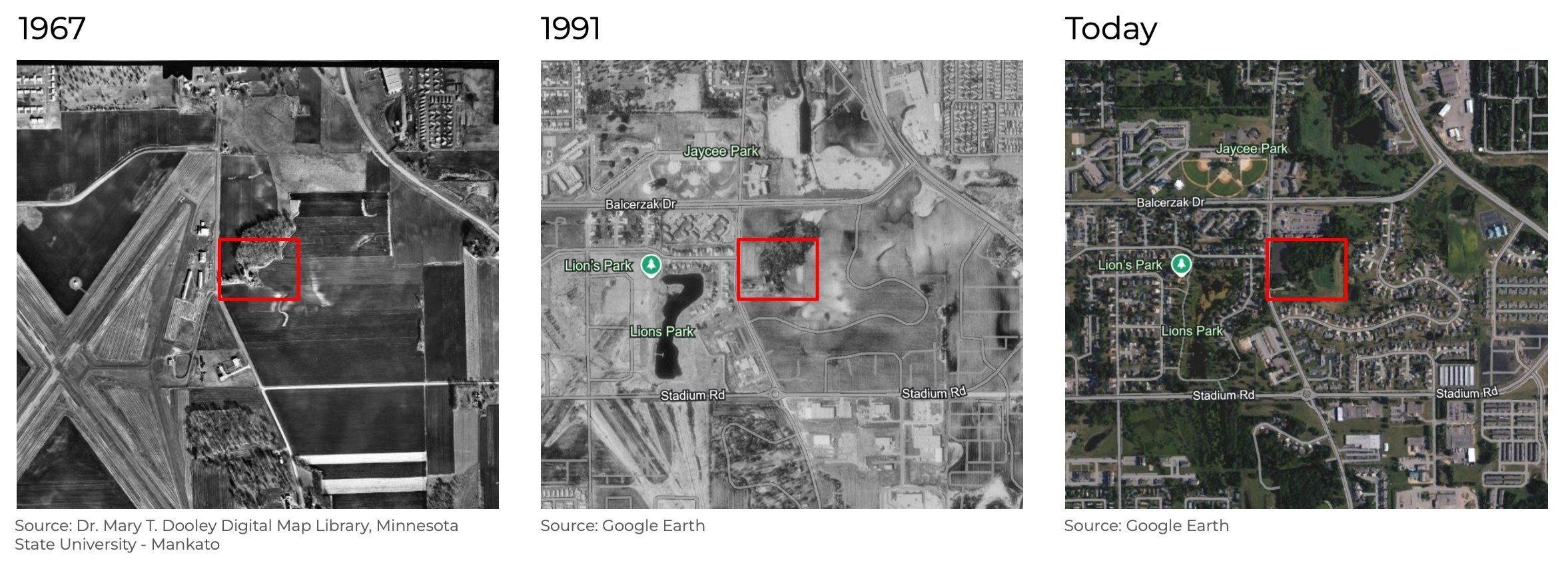
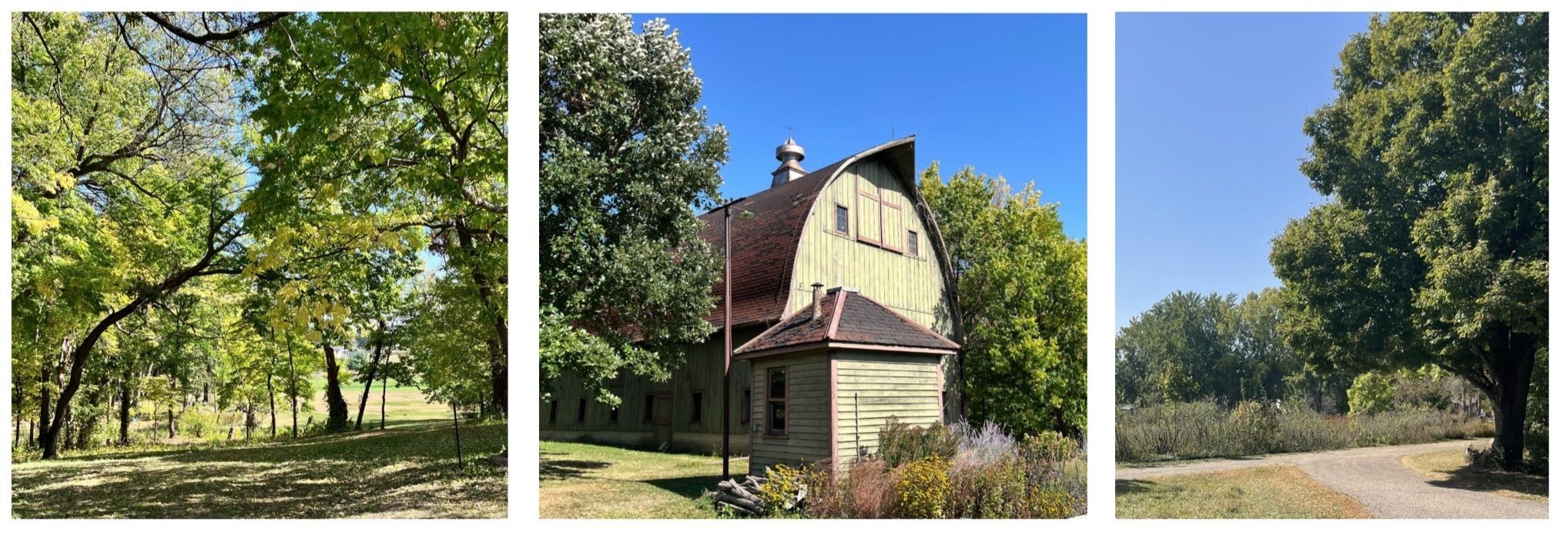
The above maps highlight the changes to Mankato over the past 50+ years. Throughout the many phases of development and growth, the Pohl Rd property has remained untouched by urban expansion. The Wortels bought the property over 50 years ago and have stewarded the land in an environmentally conscious way - no pesticides or herbicides have been used and the grounds have been maintained in ways that preserve and highlight their natural features. They farmed the land in ways that worked with, not against, the surrounding woodlands, prairies, and wetlands.
Since before Mankato’s beginnings in the mid-1800’s, this land has remained free from development. Continuing to protect this 11-acre gem in the middle of Mankato is of utmost importance. As central Minnesota sees temperatures continue to rise due to climate change, having green spaces in urban areas provides numerous benefits, such as improved air quality, reduced heat island effect, improved mental and physical health, and increased biodiversity.1
1. “The Importance of Green Spaces in an Increasingly Grey World” by A.Davitt. Sustainable Earth.org, Feb 3, 2023.
Sharing the Gift
The heart of LEC’s vision is providing space for community members to have an opportunity to connect with and learn from the land. Our values are deep-rooted in regenerative soil, land, and environmental practices, and we believe that living in right relation with Earth has the power to create thriving, healthy communities.
Pohl Rd offers a unique opportunity to introduce community members from all backgrounds to the intersection of agriculture, woodlands, prairie, and wetlands, and how each ecological system works in concert with the others. By having all of these separate but interconnected ecosystems at our fingertips, we have the ability to provide experiential learning opportunities for all ages.
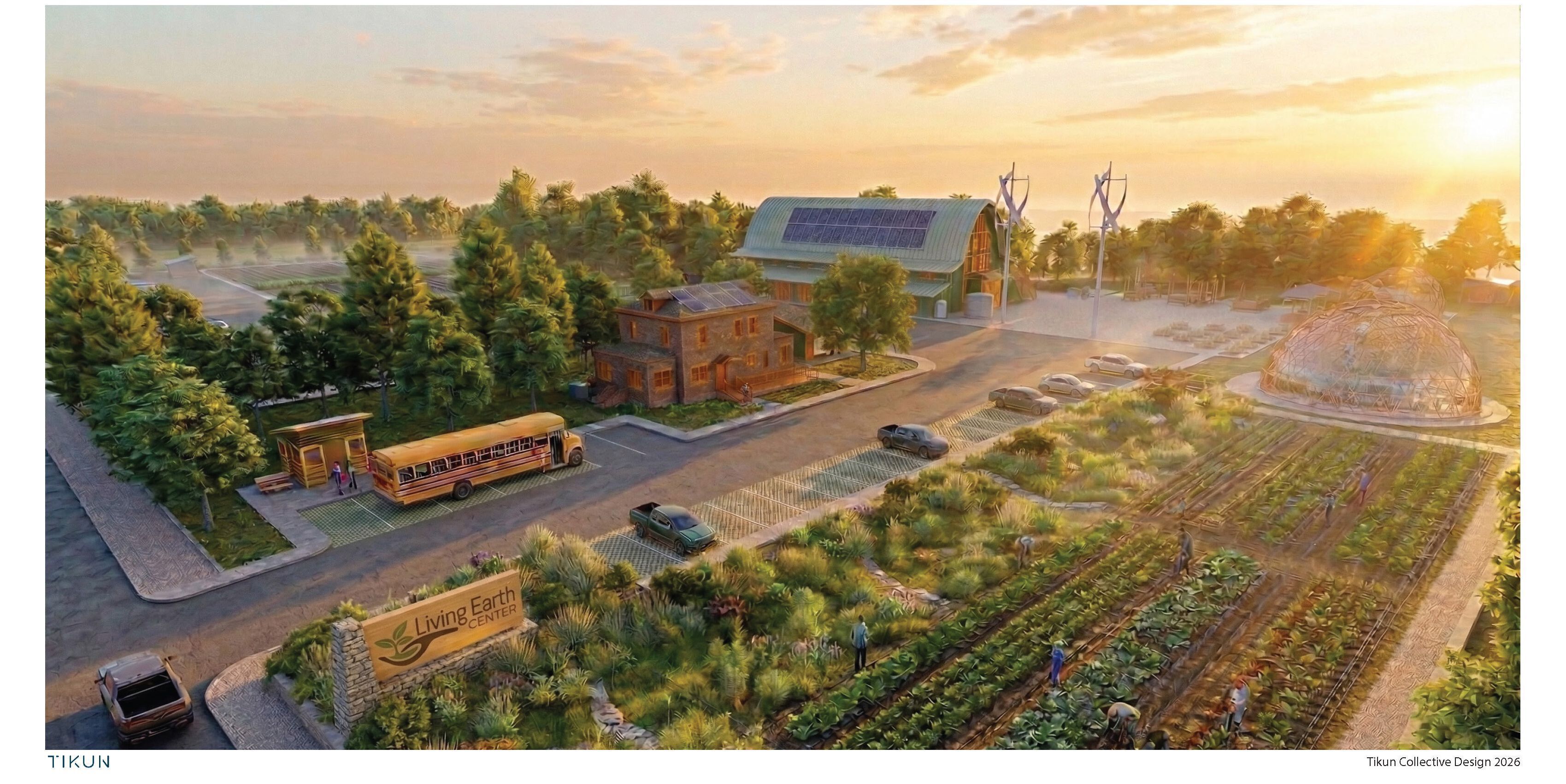
Our future vision includes educational walking trails through woodlands, wetlands, and prairie areas, including an interactive green playground and space for educational programs and workshops. Additionally, our agricultural spaces will continue to utilize regenerative soil, water, and pest management practices, which we can showcase as successful examples of how humans can work in symbiosis with nature.